
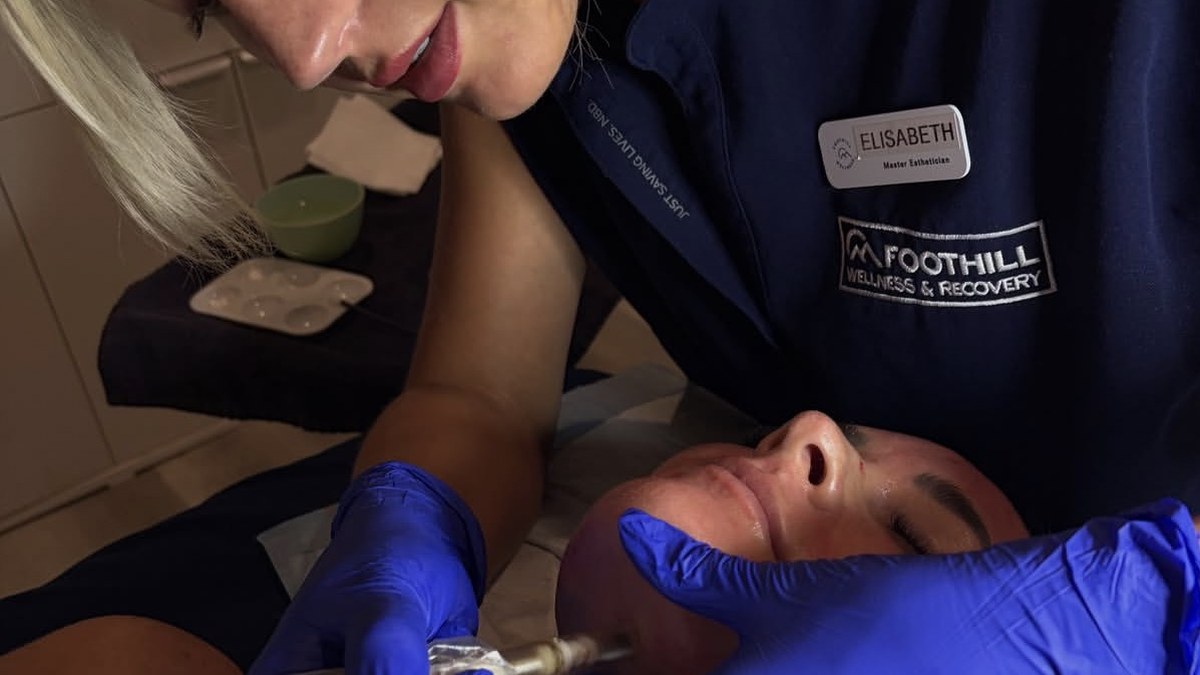
Microneedling in Salt Lake City: A Skin Care Guide for Dry Utah Air
Tight, Flaky Skin Every Winter?
The furnace kicks on, the inversion settles over the valley, and suddenly your skin feels tight by lunchtime. Moisturizer seems to disappear. Makeup sits on dry patches. You keep hearing friends talk about microneedling and wonder whether it's worth trying, or whether Utah's dry air would make it a bad idea.
You're Not the Only One Asking
Dry, uncomfortable skin is a common frustration in a climate like ours, especially in the colder months. And there's a lot of hype online about microneedling, from at-home rollers to dramatic social media clips. It's completely reasonable to want a straight answer about what it is, what it isn't, and how to take care of your skin around it before you book anything.
"Foothill Wellness is my home away from home. ... Their facials are an awesome treat for myself or for birthday presents. And now they do Botox and Fillers - yay. Chloe and all the other staff members make each visit super fun."
- Laura, Google review
What Microneedling Is (and Isn't)
Microneedling is a cosmetic skin procedure that uses a pen-shaped device with many very fine, sterile needles. As the device moves across the skin, the needles make tiny, controlled punctures. It's sometimes called "collagen induction therapy," because the idea is that your skin's natural repair response to those tiny channels may prompt it to make new collagen over time.
A professional microneedling pen is different from the rollers sold for home use. In-office devices let a trained professional adjust needle depth and speed for different areas of the face. The American Academy of Dermatology (AAD) cautions that at-home microneedling can irritate the skin, spread bacteria or viruses, and lead to scarring or color changes if it's overdone or done with too much pressure.
What the FDA says
The FDA regulates many microneedling pens as medical devices. It has authorized certain devices for specific cosmetic uses, such as improving the appearance of some facial scars and facial wrinkles in adults 22 and older. The FDA also notes that microneedling may not always produce the look you're hoping for, and that you may need more than one session.
What the research says
Research on microneedling for facial skin is encouraging but still developing. A 2025 systematic review of 21 studies, covering 723 people who had microneedling for facial aging concerns, found that most participants reported being satisfied with their treatment, and that the most common side effects were short-lived redness, scaling, burning and itching. The authors also pointed out that studies used different devices, schedules and ways of measuring results, so it's hard to say how much improvement a typical person should expect.
In plain terms: some people like the way their skin looks and feels after a series of sessions, results vary from person to person, and changes tend to be gradual rather than overnight. Anyone who promises a specific result is promising more than the research supports.
"Sara is the best!!! Highly recommend Foothill for all your wellness and aesthetic needs!! Gaby and the girls are all so nice and sweet!"
- Cali, Google review
Why Dry Utah Air Changes the Conversation
Microneedling isn't off-limits in a dry climate, but where you live does shape how you prepare and how you care for your skin afterward.
Low humidity and indoor heating
Salt Lake City sits in a semi-arid valley, and winter heating dries out indoor air even more. The FDA lists dryness, tightness, peeling and rough skin among the common short-term side effects of microneedling. If your skin already feels dry before an appointment, those first few days can feel more noticeable. That's why a provider will usually want to know how your skin has been behaving lately, not just what you'd like to change.
AAD's everyday dry-skin tips fit well here: keep showers short and warm rather than hot, use a gentle cleanser, apply a fragrance-free moisturizer while skin is still damp, and consider running a humidifier in your bedroom at night (and cleaning it regularly).
More sun than you might think
Ultraviolet (UV) light gets stronger as elevation rises. The EPA notes that UV intensity increases about 6% per kilometer above sea level, and snow, water and pavement reflect UV back at you. Salt Lake City sits at about 4,300 feet, and the ski areas up the canyons are much higher. Freshly treated skin is more sensitive to the sun, and the FDA suggests microneedling may not be a good fit if you're tanned or plan to be in the sun during the two weeks after a session. If you have a ski trip or a sunny vacation coming up, plan your appointment around it.
What to Expect Before, During and After
Before your appointment
A consultation should come first. Expect questions about your skin history, medications and what you're hoping for.
The AAD notes that your provider may ask you to pause retinoids (such as retinol or tretinoin) or certain other active skin care products for a few days beforehand.
Avoid tanning and protect your skin from the sun in the weeks leading up to your visit.
During the session
Your skin is cleansed, and a numbing cream may be applied for comfort. The provider then moves the device over each area in passes. Some people describe the sensation as a light scratching or vibration. Session length depends on the areas being treated.
Right after
Redness is expected, and your skin may feel warm, tight or a little like a mild sunburn. Some people also notice minor swelling, pinpoint bleeding or light peeling. According to the AAD, these reactions often fade within a few days to a week, though everyone's skin responds differently. Many people go back to normal activities the same day, and the AAD recommends waiting 24 hours before applying makeup.
Aftercare in a dry climate
Follow the aftercare plan your provider gives you, since it's tailored to your skin. In general, that often includes:
A gentle cleanser and a simple, fragrance-free moisturizer
Skipping exfoliants, retinoids and strong active ingredients until your provider says it's okay
Broad-spectrum sunscreen (SPF 30 or higher), shade and a hat once your skin is ready for it
A humidifier at night and short, warm showers
Avoiding hot tubs, saunas and heavy sweating for a short period, if your provider recommends it
Call your provider right away if you notice signs of infection, worsening pain, blistering or anything that doesn't seem right.
Who Should Skip or Wait
Microneedling isn't right for everyone. Based on FDA and AAD guidance, talk with a licensed provider or your doctor first, and you may be asked to wait or choose a different option, if you:
Have an active skin infection, rash, cold sore outbreak or painful, deep breakouts in the area
Are taking or have recently taken isotretinoin (Accutane)
Have a history of keloid scars or tend to heal slowly or poorly
Have eczema, psoriasis, vitiligo or an autoimmune condition
Have a bleeding or clotting disorder or take blood thinners
Have a weakened immune system or uncontrolled diabetes
Are pregnant or breastfeeding
Have a recent tan or sunburn
The FDA also notes a risk of skin darkening or lightening after microneedling, and that some devices weren't studied in people with darker skin tones. If you've had pigment changes in the past, bring that up at your consultation.
Questions to Ask Before You Book
A good provider welcomes questions. Before your first session, ask:
Who will perform my treatment, and what training do they have in microneedling?
What device do you use, and is a new, sterile needle cartridge used for every session?
Is microneedling a good fit for my skin right now, or would another option make more sense?
What will my skin look and feel like for the first few days, and what aftercare do you recommend for dry skin?
How many sessions do people usually talk about, and how will we decide whether to continue?
"I came in today for a tour and Chloe and Jessica were so helpful and could answer all my questions! I was very satisfied with my visit."
- London, Google review
How Foothill Wellness Can Help
You don't need to know what to book. We'll guide you.
Reach out. Call or text (801) 784-0095, or stop by our studio at 1414 S Foothill Dr, near the University of Utah and Foothill Village, with on-site parking.
Talk it through. Start with a consultation and skin assessment. We'll ask about your skin history, your routine and what you'd like to change, and let you know honestly whether microneedling, a gentler option or simply waiting makes the most sense for you right now.
Choose your plan. If microneedling is a fit, we'll schedule around your sun plans and walk you through aftercare for Utah's dry air. If it isn't, our facials and skin services, like signature facials and dermaplaning, may be a gentler place to start.
"Best place ever! Brooke is amazing."
- Audrey, Google review
Frequently Asked Questions
Does microneedling hurt?
Most people describe it as mildly uncomfortable rather than painful, and a numbing cream is often applied first. Comfort varies by person and by the area being treated.
How long is the downtime after microneedling?
Redness and a sunburn-like feeling are common right after a session. The AAD says these reactions often fade within a few days to a week, but it varies. Many people return to normal activities the same day and wait 24 hours before wearing makeup.
Is microneedling a good idea in Utah's dry winter air?
It can be, with the right preparation. Dry air may make the first few days of tightness or flaking more noticeable, so a simple moisturizer, a humidifier and sun protection are important parts of aftercare. Your provider can help you decide on timing.
How many microneedling sessions will I need?
There's no single answer. Some people do a series of sessions spaced weeks apart, and the FDA notes you may need more than one. Your provider can talk through what's reasonable for your skin, and results vary.
Is professional microneedling different from at-home rollers?
Yes. In-office pens are adjustable and used by trained professionals with sterile, single-use cartridges. The AAD warns that at-home microneedling can irritate skin and raise the risk of infection, scarring or color changes.
Who shouldn't get microneedling?
People with active skin infections or cold sores, recent isotretinoin use, a history of keloids, certain skin or autoimmune conditions, bleeding disorders, or who are pregnant or breastfeeding should talk with a licensed provider or doctor first. You may be asked to wait or choose another option.
Can I get microneedling before a ski trip?
It's best to plan around it. Freshly treated skin is more sensitive to the sun, and UV is stronger at higher elevations and off the snow. The FDA suggests microneedling may not be a good fit if you plan to be in the sun during the two weeks after a session, so schedule with your trip in mind.
Book Your Skin Consultation in Salt Lake City
Curious whether microneedling fits your skin and your schedule? New guests get $50 off their first visit (first-time guests only; can't be combined with other offers). Call or text (801) 784-0095 or contact us to book. Foothill Wellness, 1414 S Foothill Dr, Suite D, Salt Lake City, UT 84108.
Sources
U.S. Food and Drug Administration, Microneedling Devices
American Academy of Dermatology, Microneedling can fade scars, uneven skin tone, and more
American Academy of Dermatology, Dermatologists' top tips for relieving dry skin
Aesthetic Plastic Surgery (2025), Microneedling for Facial Rejuvenation: A Systematic Review
U.S. Environmental Protection Agency, Learn About the UV Index
Medical disclaimer: This article is for general educational purposes only and is not medical advice. Microneedling is a cosmetic procedure; it is not intended to diagnose, treat, cure or prevent any disease, and individual experiences and results vary. Talk with a licensed provider or your doctor before starting any new skin treatment, especially if you are pregnant or breastfeeding, have a skin or medical condition, or take medications. Reviews reflect individual experiences and are not a guarantee of results.
